
Brand Logo
Brand Logo
Childhood Fever: When Should You Visit a Pediatrician? Childhood Fever: When Should You Visit a Pediatrician?

Childhood Fever: When Should You Visit a Pediatrician?


July 05, 2026
Surya Hospital 9 Min Read | 12

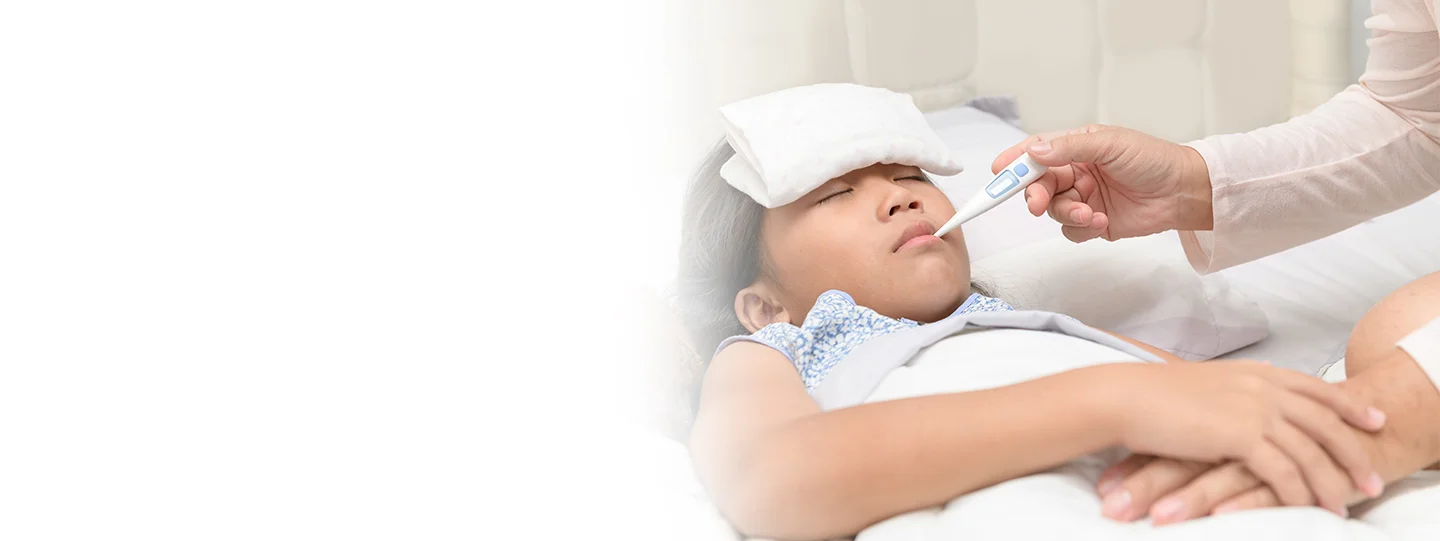
Fevers in children can be scary for most parents, especially first-timers. The moment the thermometer displays a higher-than-normal temperature number, questions begin circulating in your mind:

Is this serious? Should I immediately go to the hospital? Is this any kind of infection?

The good news is that fevers are generally harmless; it is not a disease but just a symptom. In most cases, it's actually a good sign that your child's immune system is working exactly as it should and the body is trying to heal itself.

However, not every fever should be taken lightly. Pediatrician at Surya Hospitals say that many cases of viral fever in children can be safely managed at home; however, some situations require immediate evaluation by medical professional or even emergency medical care.

Read Also: Top Tips to Shield Children from Infections During the Rainy Season

Read this guide to learn about:

  • What is childhood fever, and what temperature counts as a fever?
  • When is a fever considered an emergency?
  • How do you treat a child's fever at home?
  • Which symptoms should never be ignored?
  • When to consult a pediatrician?

Read Also: Dengue Symptoms, Treatment and Complications

What Is Childhood Fever

A childhood fever is usually referred to as a body temperature of 100.4°F (38°C) or higher.

A fever can be an indicator that your child is fighting an infection from the common cold, flu, ear infection, stomach bug or a urinary tract infection (UTI).

What Temperature Counts as a Fever

Generally, doctors consider the following as fever:

Child’s age Type of thermometer What’s considered a fever
0 to 5 years Rectal 100.4 F (38 C)
0 to 5+ years Armpit 99 F (37.22 C)
0 to 5+ years Forehead 100.4 F (38 C)
2 to 5+ years Ear 100.4 F (38 C)
5+ years Mouth 100 F (37.77 C)

Pro Tip: Rectal temperature is known as the most accurate for babies under 3 months. Oral thermometers are reliable for older children.

Read Also: Abdominal Conditions in Children: Types, Causes, & Treatment

How Long Do Childhood Fevers Last?

The exact duration depends on the specific illness; however, most viral fever typically last between 2 and 4 days. Sometimes they can extend to 5–7 days.

Contact your child’s doctor based on your child's age and specific symptoms.

Read Also: Finding the Best Children Hospitals in Mumbai

Why Do Children Get Fever?

Fever is the body’s natural defence mechanism to fight off infection.

When viruses, bacteria or any other microorganism enters the body, the brain increases the body's temperature slightly, as many germs are unable to survive well in warmer conditions. At the same time, immune cells (fighter cells) become more active.

Common causes of fever in children include:

  • Colds and flu (influenza)
  • Ear infections
  • Throat infections or tonsillitis
  • Urinary tract infections
  • Pneumonia
  • Meningitis

One common myth: Teething may slightly raise a baby's temperature, but it won't cause a fever – a temp of 100.4 F or higher.

Read Also: Best Child Care Hospitals in Mumbai

Symptoms That Are Related to Fever in Children

It can be difficult to identify certain symptoms in your baby or child. But your child may also show the following symptoms if they have a fever:

  • Chills
  • Body aches
  • Headaches
  • Earache
  • Increased heart rate
  • Not eating or drink well
  • Excessive thirst
  • Decreased urination
  • High-pitched crying
  • Fatigue
  • Sweating
  • Fussiness
  • Flushed or pale complexion

Read Also: When Your Child Needs Special Care of Pediatric Intensive Care Unit?

When Can Fever in Children Be Treated at Home?

Most fevers due to viral infections can improve within a few days.

Here are the tips for child fever treatment at home:

  • Offer plenty of fluids to prevent dehydration.
  • Dress them with light clothing to help regulate body temperature.
  • Keep the room comfortably cool to avoid overheating.
  • Encourage rest to support recovery.

Point to Remember

The aim is not to eliminate the fever but to make your child comfortable.

When Should Parents Visit a Pediatrician?

The high temperature isn't the deciding factor; experts pay much more attention to how your child looks and what their behaviour is.

Hence, visit your pediatrician if your child has:

  • Fever for more than 2–3 days.
  • Fever above 40°C (104°F).
  • Poor fluid intake.
  • Persistent vomiting or diarrhea.
  • Rash with fever.
  • Severe ear pain, sore throat, or abdominal pain.
  • Fever after travelling or exposure to serious infection.

Seek immediate emergency medical care if your child has a fever along with:

  • Trouble breathing
  • Extreme sleepiness
  • Difficult to wake
  • Stiff neck
  • Convulsions or seizures
  • Blue lips or nails
  • Constant confusion
  • Bulging soft spot in babies
  • Continuous crying even after being soothed

How Pediatricians Diagnose the Cause of the Fever

Depending on symptoms, they may recommend the following tests to determine the root cause.

  • Urine test
  • Blood test
  • Throat swab
  • Chest X-ray
  • Viral testing

Frequently Asked Questions

1. Can teething cause fever?

Teething doesn't cause fevers; however, it may raise your baby's temperature slightly.

2. Can viral fever in children require antibiotics?

No. Antibiotics only treat bacterial infections. Viral illnesses are improved through supportive care and time.

3. Is fever itself dangerous?

Usually no. Fever is a normal immune response. However, addressing the underlying condition matters more than the temperature alone.

Here is a Quick Decision Guide for Parents

Situation What You Should Do
Fever under 38°C Monitor
Fever with good activity and drinking Home care
Fever lasting more than 2–3 days Visit the paediatrician.
Fever above 40°C Medical evaluation
Baby under 3 months with fever Emergency care
Difficulty breathing, seizure, stiff neck, blue lips Call emergency services immediately

Conclusion

In most cases, fever in children is a good sign that the immune system is doing its job as it should be. Your focus shouldn't be on the thermometer alone but on the child's overall condition.

However, if you have any doubt, consult the best paediatrician near you to always have peace of mind. Early evaluation under professional guidance can offer reassurance when the illness is mild and when treatment is required.


Book an Appointment

Your Details

Emergency Number
Surya Hospital