Whenever a doctor recommends surgery to you or someone you care for, several concerns and fears surround you. You might think of a big scar, heavy blood loss, long recovery periods, and many post-surgical complications. What if your surgery could be performed with minimal tissue damage, faster recovery, and a lower risk of complications—allowing you to recover faster and return to daily life with confidence? Now this is possible with the advent of advanced techniques like laparoscopic surgery in the medical field.
Now you might be searching for the best laparoscopic surgery near you. Surya Hospitals can be a trusted choice, as every branch is well equipped with advanced infrastructure for highly successful laparoscopic surgeries, backed by high expertise.
Continue reading to learn about the types, procedures, recovery, stitch management, and success rate of laparoscopic surgery in India. This information will help you to make informed treatment decisions.
Read Also: How Much Does Laparoscopic Surgery For Infertility Cost? Factors That Affect The Price
What is Laparoscopic Surgery?
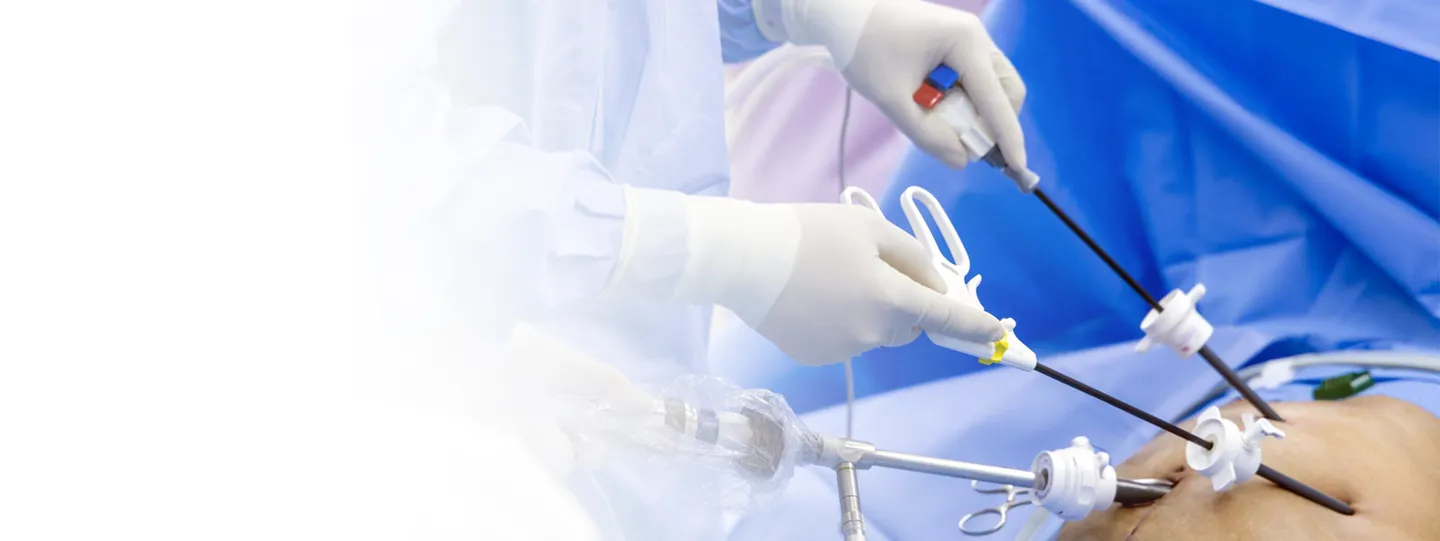
Laparoscopic Surgery is named after the thin and slender instrument used in the procedure, called the laparoscope. This instrument also has a small video camera and a light attached to its tip. Once it is inserted inside the body through miniature incisions, the surgeon can see internal organs and associated structures in high definition live display through a video monitor. This results in better precision, less tissue invasion, and reduced blood loss.
Read Also: How Laparoscopic Fibroid Removal is Done
What are the Types of Laparoscopic Surgeries in India?
The following are the common types of Laparoscopic Surgeries in India:
- Adrenal gland removal: Surgical removal of one or both adrenal glands.
- Appendectomy: Removal of an inflamed appendix.
- Biopsies: Removal of a small tissue sample for diagnosis.
- Bladder removal: Partial or complete removal of the urinary bladder.
- Cancer surgery: Removal of cancerous tissue or tumors.
- Cyst, fibroid, stone, and polyp removals: Excision of abnormal growths or deposits.
- Ectopic pregnancy removal: Removal of a pregnancy outside the uterus.
- Endometriosis surgery: Removal of endometrial tissue growths.
- Esophageal surgery: Surgical treatment of esophageal disorders.
- Gallbladder removal: Removal of the gallbladder, usually for stones.
- Gastric bypass surgery: Weight-loss surgery altering the stomach and intestines.
- Hernia repair surgery: Repair of weakened or bulging tissue.
- Kidney removal: Partial or complete removal of a kidney.
- Prostate removal: Surgical removal of the prostate gland.
- Rectal prolapse repair: Correction of protruding rectal tissue.
- Rectum removal: Surgical removal of part or all of the rectum.
- Removal of part of the bowel: Resection of diseased intestinal segments.
- Removal of part of the liver: Excision of diseased liver tissue.
- Small tumor removals: Removal of localized, small tumors.
- Spleen removal: Surgical removal of the spleen.
- Stomach removal: Partial or total removal of the stomach.
- Testicle correction surgery: Surgery to correct testicular abnormalities.
- Tubal ligation and reversal: Blocking or restoring fallopian tubes.
- Urethral and vaginal reconstruction surgery: Repair or reconstruction of urinary or vaginal structures.
Read Also: Ovarian Cyst Removal Surgery in India: Laparoscopic Procedure, Cost & Recovery Details
What to Expect During Laparoscopic Surgery in India ?
You must anticipate the following Laparoscopic Surgery in India:
- Pre-procedure preparation: Imaging, blood, and urine tests may be done; an IV line is placed for fluids, anesthesia, and medications.
- Anesthesia and support: A breathing tube is inserted to maintain the airway; a urinary catheter may be placed, and the skin is disinfected.
- Small incisions: The surgeon makes small cuts in the abdomen or pelvis to insert tubes for the camera and surgical instruments; a drain may be placed if required.
- Surgical approach options:
- Single-incision laparoscopy uses one opening for the camera and tools, reducing scarring.
- Hand-assisted laparoscopy uses a slightly larger incision to allow hand access for complex surgeries.
- Abdominal inflation: Carbon dioxide gas is introduced to create space and improve visibility.
- Procedure completion: The surgery is performed using camera-guided instruments displayed on a video monitor.
What to Expect During Recovery from Laparoscopic Surgery in India ?
It is generally safe to return to work demanding less physical activity three days following Surgery; however, it is important to confirm this with your surgeon. Resuming physical activity is often safe around one to two weeks following Laparoscopy. However, the type of Surgery and severity of the treated disease greatly influence your recovery period.
Tips to Take Care of Stitches After Laparoscopic Surgery
The following tips can help you take care of your stitches after Laparoscopic Surgery:
- Keep the incision sites clean and dry (especially during bathing)
- Avoid touching the stitches to minimize the risk of infection.
- Change dressings as advised.
- Avoid wearing tight clothes on the stitches.
- Avoid lifting heavy objects or straining the abdomen.
- Consult your doctor if you notice signs of infection such as redness, swelling, discharge, or fever.
- Do not miss attending follow-up appointments to ensure proper healing and timely stitch removal, if required.
What is the Success Rate of Laparoscopic Surgery in India?
The success rate of Laparoscopic Surgery in India is very high because of the expertise and availability of hospitals that provide advanced facilities for performing these procedures. Studies show that Laparoscopic Surgeries have low rates of serious complications and the need to switch to open surgery, which proves they are effective and safe for regular use.
Conclusion
The most positive aspect of Laparoscopic Surgeries is that they allow your surgeon to see what’s happening inside your body and treat the disorder at the same time without opening you up too much. Those tiny incisions can accomplish a lot. In very rare cases, surgeons may make decisions to convert Laparoscopic Surgery into open surgery depending upon circumstances.
Choose Surya Hospitals for the best laparoscopic surgery in India. Book your consultation now!
FAQs
Q1: How long does Laparoscopic Surgery take ?
A: Most Laparoscopic procedures take between 30 minutes and 2 hours, depending on the type and complexity of the surgery.
Q2: How long does it take to recover from Laparoscopic Surgery ?
A: Most patients resume normal daily activities within 3–7 days, while complete recovery may take 1–2 weeks, depending on the procedure.
Q3: Are stitches removed after Laparoscopic Surgery ?
A: In many cases, absorbable stitches are used and do not require removal. If non-absorbable stitches are used, they are usually removed within 7–10 days.



 +91 8828828100


 Previous
 Next
Next


